Schengen Visa Refusal Reason #13: Can You Still Get Approved Without Owning Property?
No house, no land, no car — and a refusal under reason #13. Here is what reason #13 really means, and how Filipina applicants prove intent to return without owning property.
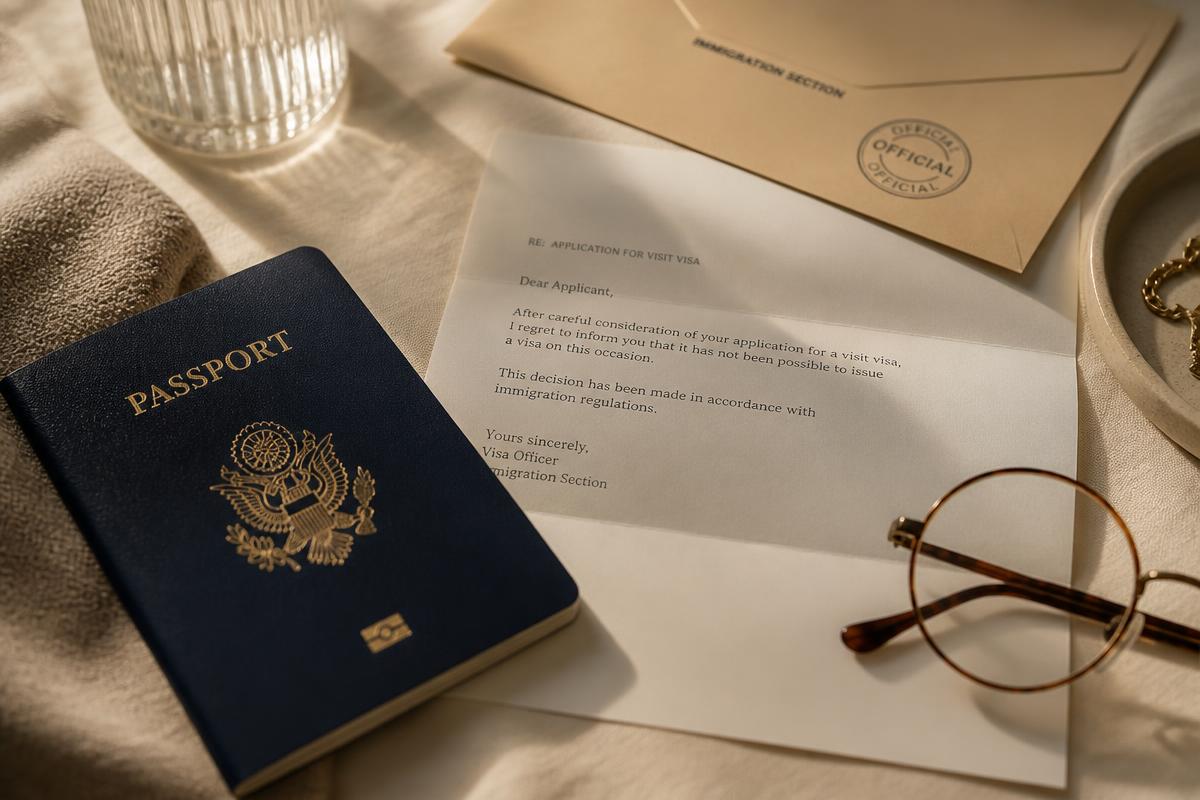
Imagine spending months preparing your Schengen visa application.
After weeks of waiting, your passport finally arrives. Sadly, a refusal letter comes with it.
And one box is marked: Reason #13.
Suddenly your mind starts racing:
- "Of course I got refused."
- "I don't own a house."
- "I don't have land."
- "I'm renting."
- "My parents own everything."
- "I have nothing to prove I'll return."
If that's what you're thinking, I want you to keep reading. This article is for you if you're visiting your partner in Europe, applying for your first Schengen visa, or worried because you don't own property in the Philippines.
What Schengen visa refusal reason #13 actually means
If you were refused under #13, your letter carries some version of this remark:
*"There are reasonable doubts as to your intention to leave the territory of the Member States before the expiry of the visa."*
It is not a statement that you lied. The embassy is trying to answer one question: will this applicant leave the Schengen area before the visa expires?
Many applicants assume the only way to answer it is with property, a car, large savings, or stable employment. So when they don't have at least one of those, they already fear refusal before they even apply.
Can you get a Schengen visa without owning property?
Yes.
Nowhere in the Visa Code does it say you must own a house, land, or a car to be approved. Property is simply one convenient piece of paper that answers the return question. If you don't have it, you answer the same question with different papers.
Visa officers assess your application as a whole: your personal circumstances, employment, finances, travel history, family situation, and the overall credibility of your file.
What visa officers are really looking for
Over the years, one pattern has stood out to me.
Applicants don't get refused because they lack property. They get refused because they fail to show convincing ties in other ways.
There's a difference.
Proof of ties goes beyond property ownership
Proof of ties is evidence of your social, economic, and family connections to your home country. It goes far beyond assets:
- Employment or business continuity — approved leave with a return date, a contract that continues after your trip, client agreements that resume when you're back.
- Financial roots — a Philippine bank account with a consistent, explainable history, investments, insurance policies, or a loan you're servicing.
- Family responsibility — dependents, a parent you support, school enrolment for your children, documented remittance or caregiving obligations.
- Legal and contractual anchors — a lease in your name, utility accounts, a PRC licence, or business registration.
- A dated, funded plan for after the trip — enrolment, a scheduled procedure, a booked event you're part of.
The point is never quantity. It is that every document points in the same direction and matches the story in your cover letter.
The Filipino reality most visa checklists don't explain
Filipino lives don't always fit neatly into a checklist.
Many Filipinas don't own the house they live in because the home is under a parent's name. Income is often informal, cash-basis, freelance, or tied to a family business. Many are the primary provider for their household.
None of that automatically makes you a higher immigration risk. It simply means those realities need clearer explanation and documentation than a title deed would.
The challenge is presenting them in a way the embassy understands.
Why sponsored applicants still get refused under #13
A generous sponsor does not solve reason #13 — it can even sharpen it. If your file shows all your resources abroad and none at home, the officer reads migration risk.
If you're relying mainly on your sponsor's financial documents, read the full breakdown here: Your Sponsor Has 100,000 EUR: Why Did Your Schengen Visa Still Get Refused?.
Common mistakes applicants make when proving ties
Many applicants accidentally weaken their own application by:
- Assuming sponsorship replaces proof of ties
- Submitting only the embassy checklist
- Never explaining, in writing, why they will return
- Ignoring family or work responsibilities
- Leaving the cover letter generic
Reapplying after a #13 refusal
- Get the refusal letter and identify every ticked box, not just #13.
- Change the evidence, not just the wording. A resubmission with the same documents usually gets the same result.
- Write a cover letter that states your return plan in the first paragraph and cites the exact annexes that support it.
- Keep the timeline honest and short — vague, open-ended trips read as risk.
What if you think you have no proof of ties?
One applicant I worked with was unemployed and owned no property. At first she believed she had almost no ties at all. After reviewing her situation, we found several genuine commitments she had never considered relevant — and together they painted a much clearer picture of her intention to return.
That is exactly why I created my Proof of Ties Guide. Most applicants already have proof of ties. They simply don't recognise it, because they're only looking for property titles and employment contracts.
Final thoughts
Proving ties to home does not require property or assets in your name. Applicants with no property are approved every week, and what they have in common is not wealth — it's a file that makes the return obvious.
If a lack of property is the only thing stopping you from applying, you're in the right place.
Free resource
If this article made you realise your situation isn't as straightforward as a checklist, that's exactly why this guide exists. It walks you through the alternative proof of ties most applicants overlook — especially if you're unemployed, self-employed, or visiting a partner abroad.